Muirsical Exceptions (to the Rock and Roll Rule)
There will be many, if not all, readers or rock music fans visiting this site who probably feel I take the opposite or alternative musical view simply for effect, to play Devils Advocate, or to try an gain a reaction.
I do take on the role of Devils Advocate on occasion, but the following examples are genuine Muirsical exceptions to the rock and roll rule...
My band or brand philosophies that feature in a number of my other articles may make some of these exceptions more understandable, and to find out how far back those band brandings go we have to revisit the days that giants walked across the rock and roll landscape.
And not jolly green ones, either. Purple ones…
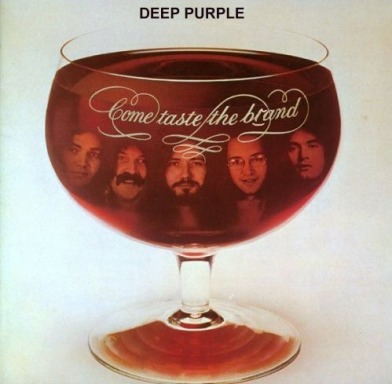
In 1975 Deep Purple’s original guitarist and major player in the Purple sound, Ritchie Blackmore, left the band and was replaced by American Tommy Bolin, who appeared on the album 'Come Taste the Band' later that same year.
For many, the Mk II line up (as they became known in retrospective Purple history) featuring Blackmore and vocalist Ian Gillan were the definitive or classic Purple line up, and one of the biggest and best heavy rock bands on the planet (the Mk II version existed from 1969-73).
However by the time Bolin arrived David Coverdale had replaced Gillan, some two years prior, and the only original Purple members that remained were drummer Ian Paice and Jon Lord on the keyboards.
'Come Taste the Band' was as much rhythm and funk as heavy rock, due in part to bass player Glenn Hughes’ stylings and Bolin’s impact.
But with the subsequent tour/s being decidedly hit and miss (primarily because drugs dominated rather than the music, especially in the case of Hughes and Bolin), the guitarist having many off nights and faced with the almost impossible task of replacing the irreplaceable (in the eyes and ears of many fans and critics) Ritchie Blackmore, the band imploded and officially split mid-1976.
This left 'Come Taste the Band' as their final studio hurrah, now seen as a disappointing full stop to Deep Purple’s initial run and regarded as a poor album by many.
I, on the other hand, love it, and it’s one of my all-time favourite albums.
More interestingly, I truly believe we are observing the first musical/ artist branding with 'Come Taste the Band.'
With Blackmore’s departure only Paice and Lord remained from the original Deep Purple. With the radical change of style, along with Bolin’s influence, I would argue a far more appropriate and accurate title could have been created by adding just one more letter...
There will be many, if not all, readers or rock music fans visiting this site who probably feel I take the opposite or alternative musical view simply for effect, to play Devils Advocate, or to try an gain a reaction.
I do take on the role of Devils Advocate on occasion, but the following examples are genuine Muirsical exceptions to the rock and roll rule...
My band or brand philosophies that feature in a number of my other articles may make some of these exceptions more understandable, and to find out how far back those band brandings go we have to revisit the days that giants walked across the rock and roll landscape.
And not jolly green ones, either. Purple ones…
In 1975 Deep Purple’s original guitarist and major player in the Purple sound, Ritchie Blackmore, left the band and was replaced by American Tommy Bolin, who appeared on the album 'Come Taste the Band' later that same year.
For many, the Mk II line up (as they became known in retrospective Purple history) featuring Blackmore and vocalist Ian Gillan were the definitive or classic Purple line up, and one of the biggest and best heavy rock bands on the planet (the Mk II version existed from 1969-73).
However by the time Bolin arrived David Coverdale had replaced Gillan, some two years prior, and the only original Purple members that remained were drummer Ian Paice and Jon Lord on the keyboards.
'Come Taste the Band' was as much rhythm and funk as heavy rock, due in part to bass player Glenn Hughes’ stylings and Bolin’s impact.
But with the subsequent tour/s being decidedly hit and miss (primarily because drugs dominated rather than the music, especially in the case of Hughes and Bolin), the guitarist having many off nights and faced with the almost impossible task of replacing the irreplaceable (in the eyes and ears of many fans and critics) Ritchie Blackmore, the band imploded and officially split mid-1976.
This left 'Come Taste the Band' as their final studio hurrah, now seen as a disappointing full stop to Deep Purple’s initial run and regarded as a poor album by many.
I, on the other hand, love it, and it’s one of my all-time favourite albums.
More interestingly, I truly believe we are observing the first musical/ artist branding with 'Come Taste the Band.'
With Blackmore’s departure only Paice and Lord remained from the original Deep Purple. With the radical change of style, along with Bolin’s influence, I would argue a far more appropriate and accurate title could have been created by adding just one more letter...
The Muirsical exceptions connected to Deep Purple don’t end with that album.
When the band split David Coverdale moved on to solo work before forming Whitesnake. That band, from 1978-1983 were, in my opinion, one of the finest heavy blues rock bands ever seen and heard - true successors to Bad Company (in their own original form).
However Whitesnake too had line-up changes which for me diluted the original chemistry and creativity.
By 1987 Coverdale had remoulded the band to such an extent that he was the only connection to the original ‘Snake and would later surround himself with primarily American musicians with their own 'previous'. They permed the hair, pulled on the spandex and produced a glossy melodic metal derivative of Whitesnake aimed directly at the 1980s American melodic metal/ rock market.
The ‘Whitesnake 1987’ album succeeded big time. It became Coverdale’s most successful album as regards sales (8xPlatinum Stateside) and critical acclaim.
It's seen as a true rock classic by many.
I have a lot of time for old Doris and his vocal ability and legacy, but I wouldn’t thank you for a copy of ‘1987’. Playing louder, faster and flashier may have made it the American success it was, but 'Whitesnake' it wasn’t.
And finally, while I’m on this Purple patch, Deep Purple may also be the first of the big name bands to reform with their classic line up (as happened in 1984).
That was “destiny” according to Ian Gillan, but more likely to be the $1M advance allegedly received by each member to reform, record and tour.
However with a number of personnel changes since that reunion they are also possibly the very definition of ‘rock brand.'
'70s heavy rock was a genre that I was (and am) very much a fan of, and have a fairly extensive knowledge of, but that’s even more true of classic progressive rock, which had its most creative and successful period between the late '60s and late '70s…
Pink Floyd’s ‘Dark Side of the Moon’ isn’t just a ‘prog’ classic, it’s a classic piece of music, period.
I certainly don’t disagree, but it’s not my favourite Floyd album (‘Meddle’).
‘The Lamb Lies Down on Broadway’ by Genesis is commonly cited as not just one of the greatest progressive rock works of the 1970s, but one of the best examples of conceptual prog rock.
I don’t have a copy or particularly like the album, but I do have a fondness for other Peter Gabriel era Genesis offerings such as ‘Selling England by the Pound.’
My favourite Genesis album is the post-Gabriel ‘Trick of the Tail,’ which, like 'Come Taste the Band,' sits comfortably within my own Muirsical Top 20 albums of all time.
For me, it’s the perfect blend of definitive progressive '70s rock and commerciality.
Similarly, Jethro Tull’s ‘Thick as a Brick’ is another that is usually seen as one of the definitive progressive conceptual pieces and indeed many see it as the concept album, and not the Lamb of Genesis.
'Brick' is another that should be right up my Muirsical street but like the Genesis classic I don’t have a copy and don’t particularly like it, either.
As regards Tull and their large catalogue of music, I rate ‘Broadsword and the Beast’ as their best work.
For most people, Yes were the masters of progressive rock in the 1970s and ‘Fragile’ and ‘Close to the Edge’ are generally accepted as the Yes classics of the progressive movement.
I have both, like both, yet they are not close to the edge of being my favourite pieces of Yes music.
That particular Muirsical award goes to both 'Relayer' and the Yes album that splits more Yes fans (and the band themselves) than any other...
‘Tales from Topographic Oceans’ is a double album created from musical sketches and ideas by vocalist Jon Anderson and guitarist Steve Howe and features one piece of music, or theme, on each side of the record (in old vinyl terms).
It is, for me, a progressive and musical classic, yet many fans and critics disliked the thematic concept or simply found it too long, including Yes keyboard player Rick Wakeman who felt it would have made a good single album.
Wakeman genuinely hated playing the pieces on the subsequent tour and the stories about Wakeman having the occasional Indian curry on stage to help relieve the boredom are absolutely genuine.
Yes are another band that have continually reinvented themselves throughout the decades and, to continue my exception rule, their progressive melodic rock stylings that were to the fore on the Trevor Rabin led ‘90125’ album should be another favourite.
Well actually it is, but it’s not my favourite Yes album of that period - that goes to the third and final album to feature guitarist Rabin, ‘YesTalk,’ an album that is dismissed by many fans and critics.
Their transformation from reinvented Yes band to reimagined Yes brand (as I define it) was complete in 2008 when they replaced seminal lead vocalist Jon Anderson with Benoit David (who’s previous included singing in Close to the Edge, a Yes Tribute Band), while Oliver Wakeman took over keyboard duties from father Rick.
I’m not the biggest fan of heavy metal, but there are some classic bands and classic albums in just about any musical genre. But again…
Black Sabbath have on many occasions been called the originators or pioneers of heavy metal which may be accurate, but I simply hear them as one of the finest exponents of heavy (riff) rock on their day.
Their debut album along with ‘Paranoid’ and usually ‘Sabbath Bloody Sabbath’ are seen as the Sabbath or metal classics. Sorry, ‘Sabotage’ for me.
Later exponents such as Diamond Head certainly knew their way around the sonic landscapes of heavy metal and were influences on later bands such as Metallica, but for me their dramatically different album ‘Canterbury’ is the genuine classic.
But those dramatic differences were a mixed musical blessing...
'Canterbury' may be the first true progressive metal album, which people now take for granted and expect from the likes of Dream Theater.
But back in 1983 it was released to complete indifference from a fan base and market that was not ready for its mix of melodic metal, progressive pieces, pop rock and tunes with strange time signatures. I said when it was released I felt it was genuinely “ahead of its time” and although a few others agreed, most critics were confused by 'Canterbury' or simply panned it.
Nearly twenty-five years after it’s original appearance 'Canterbury' was re-released on CD in a limited collectible quantity and a number of reviewers second time around saw it in retrospect as something of a mini classic, and a release that was originally “ahead of its time."
Some of those more positive reviews came from a few of the music journalists that were critical first time around. You know who you are, boys.
The kings of heavy metal may well be Iron Maiden, certainly as regards sales, fan base and global success.
But for all they went from strength to strength through the 1980s, 1990s and into the new Millennium, their finest musical moments for me go back to their earliest incarnation during the New Wave Of British Heavy Metal (which came on the back of, and to some extent a reaction to, the British Punk movement).
Their first two albums featuring original vocalist Paul Di’anno (more punky tenor than screaming metal countertenor) are my favourite Maiden albums and are superb examples of well written and performed NWOBHM.
Their ‘Number of the Beast’ album which followed (featuring vocalist Bruce Dickinson) was a natural metal progression from those initial releases.
A song such as ‘Hallowed be thy Name’ can rightly be seen as not just a Maiden classic but a metal classic, but 'Beast' also had a couple of metal-by-numbers tracks (such as ‘Invaders’) that predicted the way a lot of British metal would head, leaving true progressive metal to bands such as Dream Theater a decade later.
I have a fondness for some of the more influential or creative melodic rock/ AOR music of the 1980s and Journey are arguably the cream of that melodic rock crop.
Yet their most successful album, ‘Escape,' is my least favourite of the classic Journey era due to its purpose built sound and formulated (in some places) AOR rock. Still a bloody good album, featuring some of their best material.
Not all the artists who had their greatest successes in the '80s are met with the same Muirsical approval however, even the ones I'm a genuine fan of...
Daryl Hall & John Oates have delivered more than a little high quality pop rock and Philly Soul in their career and there are a number of H&O albums in the Muirsical collection.
Their early to mid '80s era of conveyor belt hit singles and multi platinum albums holds little interest for me however, being more about manufactured pop than musical substance.
My favourite H&O album is 'War Babies,' the 1974 Todd Rundgren produced album where blue eyed soul met alternative rock head on - and lost.
Met with general apathy by the H&O fans, critics and record buying public, it's a tragically under-rated album that deserved more musical recognition.
KISS are another hugely successful and classic act and the Kiss Army, along with most music reviewers and critics, will immediately offer ‘Destroyer’ and ‘Love Gun’ as the Kiss Klassics.
I don't disagree, but my favourite KISS album by some way is the critically panned '(Music from) The Elder’ of 1981, where they dared to stretch and produce a conceptual and progressive piece which was a complete musical departure for the band.
Towards the end of 2009 KISS released 'Sonic Boom' (their first new studio album in over ten years) to fan and critical acclaim, which was unsurprising as they had purposely written and performed the songs in the style of the "70's Kiss sound."
Equally unsurprising to the reader (having read this far) will be the fact that 'Sonic Boom' and its reinventing of the musical wheel, does little for me.
However Gene Simmons would be the first to admit that he, along with KISS colleague Paul Stanley, are now marketing the KISS brand as opposed to the KISS band, which 'Sonic Boom' (loud and) clearly confirms.
But hey, that's rock 'n' roll in the 21st Century, baby, and KISS look better than most when advertising their new Millennium brand.
Must be the makeup.
Ross Muir
December 2009
When the band split David Coverdale moved on to solo work before forming Whitesnake. That band, from 1978-1983 were, in my opinion, one of the finest heavy blues rock bands ever seen and heard - true successors to Bad Company (in their own original form).
However Whitesnake too had line-up changes which for me diluted the original chemistry and creativity.
By 1987 Coverdale had remoulded the band to such an extent that he was the only connection to the original ‘Snake and would later surround himself with primarily American musicians with their own 'previous'. They permed the hair, pulled on the spandex and produced a glossy melodic metal derivative of Whitesnake aimed directly at the 1980s American melodic metal/ rock market.
The ‘Whitesnake 1987’ album succeeded big time. It became Coverdale’s most successful album as regards sales (8xPlatinum Stateside) and critical acclaim.
It's seen as a true rock classic by many.
I have a lot of time for old Doris and his vocal ability and legacy, but I wouldn’t thank you for a copy of ‘1987’. Playing louder, faster and flashier may have made it the American success it was, but 'Whitesnake' it wasn’t.
And finally, while I’m on this Purple patch, Deep Purple may also be the first of the big name bands to reform with their classic line up (as happened in 1984).
That was “destiny” according to Ian Gillan, but more likely to be the $1M advance allegedly received by each member to reform, record and tour.
However with a number of personnel changes since that reunion they are also possibly the very definition of ‘rock brand.'
'70s heavy rock was a genre that I was (and am) very much a fan of, and have a fairly extensive knowledge of, but that’s even more true of classic progressive rock, which had its most creative and successful period between the late '60s and late '70s…
Pink Floyd’s ‘Dark Side of the Moon’ isn’t just a ‘prog’ classic, it’s a classic piece of music, period.
I certainly don’t disagree, but it’s not my favourite Floyd album (‘Meddle’).
‘The Lamb Lies Down on Broadway’ by Genesis is commonly cited as not just one of the greatest progressive rock works of the 1970s, but one of the best examples of conceptual prog rock.
I don’t have a copy or particularly like the album, but I do have a fondness for other Peter Gabriel era Genesis offerings such as ‘Selling England by the Pound.’
My favourite Genesis album is the post-Gabriel ‘Trick of the Tail,’ which, like 'Come Taste the Band,' sits comfortably within my own Muirsical Top 20 albums of all time.
For me, it’s the perfect blend of definitive progressive '70s rock and commerciality.
Similarly, Jethro Tull’s ‘Thick as a Brick’ is another that is usually seen as one of the definitive progressive conceptual pieces and indeed many see it as the concept album, and not the Lamb of Genesis.
'Brick' is another that should be right up my Muirsical street but like the Genesis classic I don’t have a copy and don’t particularly like it, either.
As regards Tull and their large catalogue of music, I rate ‘Broadsword and the Beast’ as their best work.
For most people, Yes were the masters of progressive rock in the 1970s and ‘Fragile’ and ‘Close to the Edge’ are generally accepted as the Yes classics of the progressive movement.
I have both, like both, yet they are not close to the edge of being my favourite pieces of Yes music.
That particular Muirsical award goes to both 'Relayer' and the Yes album that splits more Yes fans (and the band themselves) than any other...
‘Tales from Topographic Oceans’ is a double album created from musical sketches and ideas by vocalist Jon Anderson and guitarist Steve Howe and features one piece of music, or theme, on each side of the record (in old vinyl terms).
It is, for me, a progressive and musical classic, yet many fans and critics disliked the thematic concept or simply found it too long, including Yes keyboard player Rick Wakeman who felt it would have made a good single album.
Wakeman genuinely hated playing the pieces on the subsequent tour and the stories about Wakeman having the occasional Indian curry on stage to help relieve the boredom are absolutely genuine.
Yes are another band that have continually reinvented themselves throughout the decades and, to continue my exception rule, their progressive melodic rock stylings that were to the fore on the Trevor Rabin led ‘90125’ album should be another favourite.
Well actually it is, but it’s not my favourite Yes album of that period - that goes to the third and final album to feature guitarist Rabin, ‘YesTalk,’ an album that is dismissed by many fans and critics.
Their transformation from reinvented Yes band to reimagined Yes brand (as I define it) was complete in 2008 when they replaced seminal lead vocalist Jon Anderson with Benoit David (who’s previous included singing in Close to the Edge, a Yes Tribute Band), while Oliver Wakeman took over keyboard duties from father Rick.
I’m not the biggest fan of heavy metal, but there are some classic bands and classic albums in just about any musical genre. But again…
Black Sabbath have on many occasions been called the originators or pioneers of heavy metal which may be accurate, but I simply hear them as one of the finest exponents of heavy (riff) rock on their day.
Their debut album along with ‘Paranoid’ and usually ‘Sabbath Bloody Sabbath’ are seen as the Sabbath or metal classics. Sorry, ‘Sabotage’ for me.
Later exponents such as Diamond Head certainly knew their way around the sonic landscapes of heavy metal and were influences on later bands such as Metallica, but for me their dramatically different album ‘Canterbury’ is the genuine classic.
But those dramatic differences were a mixed musical blessing...
'Canterbury' may be the first true progressive metal album, which people now take for granted and expect from the likes of Dream Theater.
But back in 1983 it was released to complete indifference from a fan base and market that was not ready for its mix of melodic metal, progressive pieces, pop rock and tunes with strange time signatures. I said when it was released I felt it was genuinely “ahead of its time” and although a few others agreed, most critics were confused by 'Canterbury' or simply panned it.
Nearly twenty-five years after it’s original appearance 'Canterbury' was re-released on CD in a limited collectible quantity and a number of reviewers second time around saw it in retrospect as something of a mini classic, and a release that was originally “ahead of its time."
Some of those more positive reviews came from a few of the music journalists that were critical first time around. You know who you are, boys.
The kings of heavy metal may well be Iron Maiden, certainly as regards sales, fan base and global success.
But for all they went from strength to strength through the 1980s, 1990s and into the new Millennium, their finest musical moments for me go back to their earliest incarnation during the New Wave Of British Heavy Metal (which came on the back of, and to some extent a reaction to, the British Punk movement).
Their first two albums featuring original vocalist Paul Di’anno (more punky tenor than screaming metal countertenor) are my favourite Maiden albums and are superb examples of well written and performed NWOBHM.
Their ‘Number of the Beast’ album which followed (featuring vocalist Bruce Dickinson) was a natural metal progression from those initial releases.
A song such as ‘Hallowed be thy Name’ can rightly be seen as not just a Maiden classic but a metal classic, but 'Beast' also had a couple of metal-by-numbers tracks (such as ‘Invaders’) that predicted the way a lot of British metal would head, leaving true progressive metal to bands such as Dream Theater a decade later.
I have a fondness for some of the more influential or creative melodic rock/ AOR music of the 1980s and Journey are arguably the cream of that melodic rock crop.
Yet their most successful album, ‘Escape,' is my least favourite of the classic Journey era due to its purpose built sound and formulated (in some places) AOR rock. Still a bloody good album, featuring some of their best material.
Not all the artists who had their greatest successes in the '80s are met with the same Muirsical approval however, even the ones I'm a genuine fan of...
Daryl Hall & John Oates have delivered more than a little high quality pop rock and Philly Soul in their career and there are a number of H&O albums in the Muirsical collection.
Their early to mid '80s era of conveyor belt hit singles and multi platinum albums holds little interest for me however, being more about manufactured pop than musical substance.
My favourite H&O album is 'War Babies,' the 1974 Todd Rundgren produced album where blue eyed soul met alternative rock head on - and lost.
Met with general apathy by the H&O fans, critics and record buying public, it's a tragically under-rated album that deserved more musical recognition.
KISS are another hugely successful and classic act and the Kiss Army, along with most music reviewers and critics, will immediately offer ‘Destroyer’ and ‘Love Gun’ as the Kiss Klassics.
I don't disagree, but my favourite KISS album by some way is the critically panned '(Music from) The Elder’ of 1981, where they dared to stretch and produce a conceptual and progressive piece which was a complete musical departure for the band.
Towards the end of 2009 KISS released 'Sonic Boom' (their first new studio album in over ten years) to fan and critical acclaim, which was unsurprising as they had purposely written and performed the songs in the style of the "70's Kiss sound."
Equally unsurprising to the reader (having read this far) will be the fact that 'Sonic Boom' and its reinventing of the musical wheel, does little for me.
However Gene Simmons would be the first to admit that he, along with KISS colleague Paul Stanley, are now marketing the KISS brand as opposed to the KISS band, which 'Sonic Boom' (loud and) clearly confirms.
But hey, that's rock 'n' roll in the 21st Century, baby, and KISS look better than most when advertising their new Millennium brand.
Must be the makeup.
Ross Muir
December 2009