Six of The Best
The six audio tracks that accompany this article are the songs that go beyond the thousands of others in my collection, that I know well or that I have heard. They hit the Muirsical spot like no others.
A number of them (one quite significantly) also help to lyrically define me.
If it was expanded to a Top 100, or a similarly large list, it would include an eclectic range of pieces that went beyond the rock music genre featured in this sextet.
An extended list would include tunes such as 'Goodbye to Love' by the Carpenters, Metallica's metal classic 'Enter Sandman' and the modern classical masterpiece 'Rhapsody in Blue' by George Gershwin.
Now there's a triple-play you won't hear in many households or radio stations.
Other more muirsically expected appearances would feature too, such as Journey and Steve Perry ('Easy to Fall' and 'One More Time' respectively).
But six it is and, for the curious, the phrase "six of the best" refers to the good old days of teachers being allowed to discipline wayward school pupils with a strap, or belt, smacked six times over the hands.
The day it was outlawed was the day anti-social youth culture took one giant leap for mankind’s decline.
I digress…
These songs are presented in the order I sequence them for my my personal Six of the Best playback, but are interchangeable as regards favourites – excepting my second favourite song (track 5) and favourite piece of music (track 6).
A little about each song and the artist is summarised below the related audio track but to hear the full story you really have to Listen to the Music (there’s another great song).
Please Note: Two of the songs (tracks 2 & 4) are long-form pieces of music.
Buffering and streaming of the audio may take a little longer than expected, depending on the users connection speed and computer hardware.
Track 1: For the Want of a Nail – Todd Rundgren (1989)
The six audio tracks that accompany this article are the songs that go beyond the thousands of others in my collection, that I know well or that I have heard. They hit the Muirsical spot like no others.
A number of them (one quite significantly) also help to lyrically define me.
If it was expanded to a Top 100, or a similarly large list, it would include an eclectic range of pieces that went beyond the rock music genre featured in this sextet.
An extended list would include tunes such as 'Goodbye to Love' by the Carpenters, Metallica's metal classic 'Enter Sandman' and the modern classical masterpiece 'Rhapsody in Blue' by George Gershwin.
Now there's a triple-play you won't hear in many households or radio stations.
Other more muirsically expected appearances would feature too, such as Journey and Steve Perry ('Easy to Fall' and 'One More Time' respectively).
But six it is and, for the curious, the phrase "six of the best" refers to the good old days of teachers being allowed to discipline wayward school pupils with a strap, or belt, smacked six times over the hands.
The day it was outlawed was the day anti-social youth culture took one giant leap for mankind’s decline.
I digress…
These songs are presented in the order I sequence them for my my personal Six of the Best playback, but are interchangeable as regards favourites – excepting my second favourite song (track 5) and favourite piece of music (track 6).
A little about each song and the artist is summarised below the related audio track but to hear the full story you really have to Listen to the Music (there’s another great song).
Please Note: Two of the songs (tracks 2 & 4) are long-form pieces of music.
Buffering and streaming of the audio may take a little longer than expected, depending on the users connection speed and computer hardware.
Track 1: For the Want of a Nail – Todd Rundgren (1989)
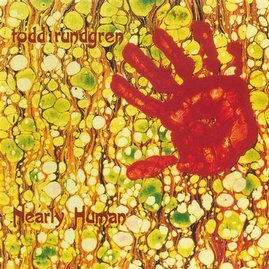
“I’ve been wrong, I had plans so big...
But the devil’s in the details, I left out one thing…
No one to love me (no one to love me)… No one to love me... no one to - love.”
My favourite artist is Todd Rundgren so it’s no surprise he’s represented here.
We'll also be listening to Mr. Rundgren later when we hear his form of democratic rock (band) in action.
'For the Want of a Nail' is not his best song, but then this is a list of favourite songs, and therein lies the difference.
As an opening statement it’s hard to beat and from the very first emotive vocalisations (backed by the powerful voice of Bobby Womack in guest vocalist spot) I’m hooked.
The song then hits its stride with an uplifting tempo before swinging towards its sing-a-long finale.
The premise of the song is the old adage of the message being lost because something first seen as inconsequential was ignored.
But ignore the details at your peril, because you will miss out on the prize.
Never sweat the small stuff – but never forget its importance.
Track 2: Pirates – Emerson Lake & Palmer (1977)
But the devil’s in the details, I left out one thing…
No one to love me (no one to love me)… No one to love me... no one to - love.”
My favourite artist is Todd Rundgren so it’s no surprise he’s represented here.
We'll also be listening to Mr. Rundgren later when we hear his form of democratic rock (band) in action.
'For the Want of a Nail' is not his best song, but then this is a list of favourite songs, and therein lies the difference.
As an opening statement it’s hard to beat and from the very first emotive vocalisations (backed by the powerful voice of Bobby Womack in guest vocalist spot) I’m hooked.
The song then hits its stride with an uplifting tempo before swinging towards its sing-a-long finale.
The premise of the song is the old adage of the message being lost because something first seen as inconsequential was ignored.
But ignore the details at your peril, because you will miss out on the prize.
Never sweat the small stuff – but never forget its importance.
Track 2: Pirates – Emerson Lake & Palmer (1977)
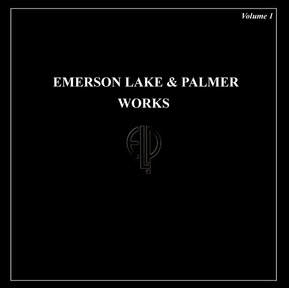
This is the first of two songs featured that are best described as 70's orchestrated rock.
And on 'Pirates' we have the Paris Opera Orchestra, no less.
The title says it all.
Musically and lyrically we are transported to the high seas and days of pirate flags and Spanish gold, because 'Pirates' is the musical soundtrack to all the swashbuckling tales you have read – or watched in classic Skull & Crossbones movies starring the likes of Errol Flynn.
It’s emotive, it’s pulsating, it’s adrenalin surging, it's... probably a guy thing.
But it's a stunning piece that many music fans – male and female alike – can appreciate.
Emerson Lake & Palmer were coming off of a two and a half year break in 1977 and took their time with what became the classic Works Volume 1 album.
Greg Lake and co-lyricist Peter Sinfield took an inordinate amount of time on the lyrics for 'Pirates' as they wanted it to be nothing less than a "musical screenplay."
They didn't just take hours or days; they spent weeks on the lyrical phrasing and interpretation.
To this day it’s the one song I know so well lyrically that I can sing over the song and get every nuance and inflection so on the mark as to hide Greg Lake’s vocal underneath.
"Who'll drink a toast with me... to the Devil, and the deep blue sea...
Gold drives a man... to Dream!"
Track 3: Dust in the Wind – Kansas (1998 Orchestrated version)
And on 'Pirates' we have the Paris Opera Orchestra, no less.
The title says it all.
Musically and lyrically we are transported to the high seas and days of pirate flags and Spanish gold, because 'Pirates' is the musical soundtrack to all the swashbuckling tales you have read – or watched in classic Skull & Crossbones movies starring the likes of Errol Flynn.
It’s emotive, it’s pulsating, it’s adrenalin surging, it's... probably a guy thing.
But it's a stunning piece that many music fans – male and female alike – can appreciate.
Emerson Lake & Palmer were coming off of a two and a half year break in 1977 and took their time with what became the classic Works Volume 1 album.
Greg Lake and co-lyricist Peter Sinfield took an inordinate amount of time on the lyrics for 'Pirates' as they wanted it to be nothing less than a "musical screenplay."
They didn't just take hours or days; they spent weeks on the lyrical phrasing and interpretation.
To this day it’s the one song I know so well lyrically that I can sing over the song and get every nuance and inflection so on the mark as to hide Greg Lake’s vocal underneath.
"Who'll drink a toast with me... to the Devil, and the deep blue sea...
Gold drives a man... to Dream!"
Track 3: Dust in the Wind – Kansas (1998 Orchestrated version)
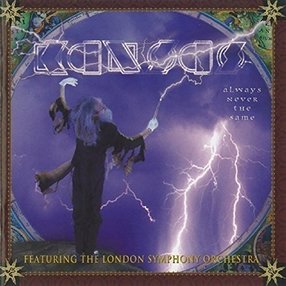
'Yesterday' by the Beatles (more correctly Paul McCartney) is a timeless classic.
It is rightly described as one of the most beautiful, poignant and emotive songs of the 20th cntury – or any century for that matter – and is regarded as one of the greatest songs ever written.
But for those of a generation just a little too young to catch 'Yesterday' and the Beatles phenomenon first time around, 'Dust in the Wind' steps up to the plate as a song that matches 'Yesterday.'
And, for me, surpasses it.
Written by Kerry Livgren, the original power behind the American rock group Kansas, this re-recorded version with the London Symphony Orchestra is possibly even more beautiful and poignant than the original 1977 version.
This is one of the songs that lyrically defines a part of me, or part of my life philosophy.
Simple enough in premise, but too often taken for granted…
“Now, don’t hang on – nothing lasts forever but the earth and sky...
When it slips away – all your money won’t another minute buy…”
Not everyone will have the same belief or life perspective, but one absolute fact remains – we are on this ball of rock “only for a moment, and the moment’s gone.”
And for that reason live your life for every one of those moments.
“Dust in the wind, all we are is dust in the wind…”
Track 4: Salisbury – Uriah Heep (1971)
It is rightly described as one of the most beautiful, poignant and emotive songs of the 20th cntury – or any century for that matter – and is regarded as one of the greatest songs ever written.
But for those of a generation just a little too young to catch 'Yesterday' and the Beatles phenomenon first time around, 'Dust in the Wind' steps up to the plate as a song that matches 'Yesterday.'
And, for me, surpasses it.
Written by Kerry Livgren, the original power behind the American rock group Kansas, this re-recorded version with the London Symphony Orchestra is possibly even more beautiful and poignant than the original 1977 version.
This is one of the songs that lyrically defines a part of me, or part of my life philosophy.
Simple enough in premise, but too often taken for granted…
“Now, don’t hang on – nothing lasts forever but the earth and sky...
When it slips away – all your money won’t another minute buy…”
Not everyone will have the same belief or life perspective, but one absolute fact remains – we are on this ball of rock “only for a moment, and the moment’s gone.”
And for that reason live your life for every one of those moments.
“Dust in the wind, all we are is dust in the wind…”
Track 4: Salisbury – Uriah Heep (1971)
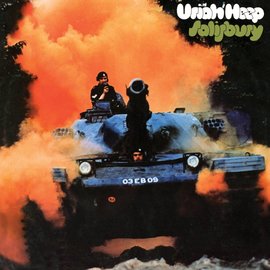
The second of the two orchestrated rock songs featured here, 'Salisbury' has the band taking equal billing with a Brass & Woodwind ensemble.
Although this track would seem to be, on the face of it, a similar beast to 'Pirates,' there are more differences than similarities...
Uriiah Heep’s take on the orchestrated epic is far more base in concept than 'Pirates' musical theatrics.
'Salisbury is themed around the emotions of union, lust and the reality that what might seem like forever is more akin to the moment.
On 'Pirates' the tales of adventure are driven by the artistry of the lyrics and while the late David Byron brings a strong voice to lyrical proceedings on 'Salisbury' it's the rise and fall of the musical score that delivers the emotions described.
Ken Hensley, who would become the architect of Uriah Heep's classic era successes, has since commented that he wasn’t fully happy with 'Salisbury' as there were flubs in the orchestrated pieces and a little loose in arrangement.
But that's part of its charm and highlights another difference between 'Salisbury' and 'Pirates.'
ELP had lengthy studio and recording time whereas Uriah Heep recorded the Salisbury album in a relatively short time span; It was the band's second album and the record label/ management had them on an album-tour-album-tour schedule (a common occurrence for bands like Heep in the early to mid 70's).
But the real difference between Uriah Heep, ELP and their respective creations can be gleaned from the following anecdote...
Heep guitarist Mick Box wasn’t getting the feel or inspiration he wanted for his big solo moment on 'Salisbury' so retired to the local pub for a couple of pints.
Upon return he asked for the lights to be dimmed, cranked the Marshall stack and wah-wah pedal to full and nailed it in one take.
Sounds like a rock-myth, but Box swears this is how it occurred, the band has never contradicted the story and Engineer Peter Gallen has also recalled the incident.
Compare that to the earlier story of the eternity taken over the lyrics for 'Pirates.'
That song probably took longer to write and record than Uriah Heep took to do the entire Salisbury album.
Gotta love 'em both.
Track 5: Just One Victory (live versions) – Utopia
Although this track would seem to be, on the face of it, a similar beast to 'Pirates,' there are more differences than similarities...
Uriiah Heep’s take on the orchestrated epic is far more base in concept than 'Pirates' musical theatrics.
'Salisbury is themed around the emotions of union, lust and the reality that what might seem like forever is more akin to the moment.
On 'Pirates' the tales of adventure are driven by the artistry of the lyrics and while the late David Byron brings a strong voice to lyrical proceedings on 'Salisbury' it's the rise and fall of the musical score that delivers the emotions described.
Ken Hensley, who would become the architect of Uriah Heep's classic era successes, has since commented that he wasn’t fully happy with 'Salisbury' as there were flubs in the orchestrated pieces and a little loose in arrangement.
But that's part of its charm and highlights another difference between 'Salisbury' and 'Pirates.'
ELP had lengthy studio and recording time whereas Uriah Heep recorded the Salisbury album in a relatively short time span; It was the band's second album and the record label/ management had them on an album-tour-album-tour schedule (a common occurrence for bands like Heep in the early to mid 70's).
But the real difference between Uriah Heep, ELP and their respective creations can be gleaned from the following anecdote...
Heep guitarist Mick Box wasn’t getting the feel or inspiration he wanted for his big solo moment on 'Salisbury' so retired to the local pub for a couple of pints.
Upon return he asked for the lights to be dimmed, cranked the Marshall stack and wah-wah pedal to full and nailed it in one take.
Sounds like a rock-myth, but Box swears this is how it occurred, the band has never contradicted the story and Engineer Peter Gallen has also recalled the incident.
Compare that to the earlier story of the eternity taken over the lyrics for 'Pirates.'
That song probably took longer to write and record than Uriah Heep took to do the entire Salisbury album.
Gotta love 'em both.
Track 5: Just One Victory (live versions) – Utopia
“We've been waiting so long, we’ve been waiting... so long.
We've been waiting for the sun to rise and shine... shining still, to give us the will.”
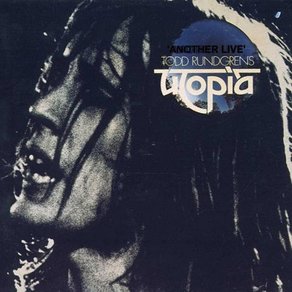
It may be the land of Utopia but we are in fact back with Todd Rundgren; 'Just One Victory' first saw the light of day as the closing statement on Rundgren's seminal and critically acclaimed 1973 album A Wizard, A True Star.
Arguably more message than musical, it became a live staple of Todd Rundgren’s Utopia by the next year and the official live version (presented here) is from the band's 1975 Another Live album.
By the time the band were streamlined to a democratic four-piece outfit in 1976 it had taken on a life of its own, adored by the fans who took the message to heart and sang their voices and lungs out on Utopia tours up until the band's demise in 1985.
A song of hope, a song of comradeship, and a song (specifically the live renditions circa 1976-'85) that, personally, is only beaten by the one that will follow.
My favourite version of 'JOV' is from a 1985 show in Milwaukee, a recording that is poignant for Utopia fans as it was recorded towards the end of the band's final tour.
I have many versions of the song but that Milwaukee performance just hits the spot.
With 'JOV' seemingly a thing of the past live (it was not performed on Utopia’s reunion tour of 1992) it was a highlight moment for the audiences of Todd Rundgren’s 2004 live shows when, after nearly twenty years retirement, the song was performed to close the shows, including obligatory ‘burn out’ guitar solo.
There was an extraordinary vibe during 'JOV' at the 2004 London concert and quite a sight to see fans of all ages (particularly the rock veterans), singing, grinning and hugging like loons, still in search of "just one victory."
“Hold that line, baby hold that line - get up boys, and hit ‘em one more time.
We may be losing now but we can’t stop trying, so hold that line, baby hold that line.”
Not a dry eye in the house, as they say.
Track 6: Dedication – Pat Travers (1977)
We've been waiting for the sun to rise and shine... shining still, to give us the will.”
It may be the land of Utopia but we are in fact back with Todd Rundgren; 'Just One Victory' first saw the light of day as the closing statement on Rundgren's seminal and critically acclaimed 1973 album A Wizard, A True Star.
Arguably more message than musical, it became a live staple of Todd Rundgren’s Utopia by the next year and the official live version (presented here) is from the band's 1975 Another Live album.
By the time the band were streamlined to a democratic four-piece outfit in 1976 it had taken on a life of its own, adored by the fans who took the message to heart and sang their voices and lungs out on Utopia tours up until the band's demise in 1985.
A song of hope, a song of comradeship, and a song (specifically the live renditions circa 1976-'85) that, personally, is only beaten by the one that will follow.
My favourite version of 'JOV' is from a 1985 show in Milwaukee, a recording that is poignant for Utopia fans as it was recorded towards the end of the band's final tour.
I have many versions of the song but that Milwaukee performance just hits the spot.
With 'JOV' seemingly a thing of the past live (it was not performed on Utopia’s reunion tour of 1992) it was a highlight moment for the audiences of Todd Rundgren’s 2004 live shows when, after nearly twenty years retirement, the song was performed to close the shows, including obligatory ‘burn out’ guitar solo.
There was an extraordinary vibe during 'JOV' at the 2004 London concert and quite a sight to see fans of all ages (particularly the rock veterans), singing, grinning and hugging like loons, still in search of "just one victory."
“Hold that line, baby hold that line - get up boys, and hit ‘em one more time.
We may be losing now but we can’t stop trying, so hold that line, baby hold that line.”
Not a dry eye in the house, as they say.
Track 6: Dedication – Pat Travers (1977)
“And this one’s dedicated to the people who…
Who help you make a stand, who help you make it through.”
My all-time favourite piece of music and always will be.
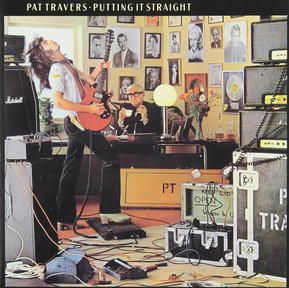
'Dedication' doesn’t need too much summary as it’s self-explanatory lyrically, but musically it's not the style usually associated with the rock and blues of Patrick Henry Travers.
The eight-minute song begins with an extensive instrumental section before going into a more traditional rock ballad piece.
Lyrically, it’s the very words I would express, and do express, when discussing one of the most important things in life – friendship, trust and the bond that can be struck between people who may be next door neighbours or at opposite ends of the world. Those who can be relied upon to be there when called.
I wouldn’t change one single line, or one word, from the lyrics.
Musically the opening section sports a jazz-esque groove with a Hammond organ swirling up front before the second half of the piece featuring the lyric settles in.
The latter half of the song also includes a saxophone solo. Perfect.
In a bizarre set of circumstances it actually took me twenty-seven years to get a proper chance to say thanks to Pat Travers for that song when, in 2004, I had the opportunity to spend some time with the musician.
It was one of those ridiculously comfortable exchanges where it was evident this was just two guys talking as opposed to "ingratiating fan" and "rock star" (but then neither of us can play those respective roles I’m pleased to say).
The song itself was simply a studio number, conceived for the Puttin’ it Straight album sessions and inspired by a good friend of Pat’s who helped him procure his first publishing deal (before he had written as much as one song) in 1975.
The song itself then morphed into a statement seemingly aimed towards one person, but reaching to all of a like mind.
"...Teach yourself to be a kind person, when a friend is really down,
You can send them back up to the top... now I hope you understand..."
Having shot the breeze on many a subject and confused those around us backstage by singing a Todd Rundgren song or two (another connection and Pat has performed with Todd), it was only well after the event it was brought to my attention that something many would see as quite the coincidence was actually, to my mind, not even a surprise. We share the same birth date, April 12th.
And to complete the musical links, the 1985 live version of 'Just One Victory' (as summarised earlier) that is far and away my favourite recording of the song? Turns out it was performed on April 12th.
I didn’t know that at the time, either.
"And everybody, everybody, understand me now?"
Now stop reading this drivel and go listen to some of your favourite music.
Ross Muir
April 12th 2010
(updated and expanded from the writer's original 1990 text document)
Featured audio tracks presented to accompany the above article and to promote the music of the artists.
No infringement of copyright is intended.
Who help you make a stand, who help you make it through.”
My all-time favourite piece of music and always will be.
'Dedication' doesn’t need too much summary as it’s self-explanatory lyrically, but musically it's not the style usually associated with the rock and blues of Patrick Henry Travers.
The eight-minute song begins with an extensive instrumental section before going into a more traditional rock ballad piece.
Lyrically, it’s the very words I would express, and do express, when discussing one of the most important things in life – friendship, trust and the bond that can be struck between people who may be next door neighbours or at opposite ends of the world. Those who can be relied upon to be there when called.
I wouldn’t change one single line, or one word, from the lyrics.
Musically the opening section sports a jazz-esque groove with a Hammond organ swirling up front before the second half of the piece featuring the lyric settles in.
The latter half of the song also includes a saxophone solo. Perfect.
In a bizarre set of circumstances it actually took me twenty-seven years to get a proper chance to say thanks to Pat Travers for that song when, in 2004, I had the opportunity to spend some time with the musician.
It was one of those ridiculously comfortable exchanges where it was evident this was just two guys talking as opposed to "ingratiating fan" and "rock star" (but then neither of us can play those respective roles I’m pleased to say).
The song itself was simply a studio number, conceived for the Puttin’ it Straight album sessions and inspired by a good friend of Pat’s who helped him procure his first publishing deal (before he had written as much as one song) in 1975.
The song itself then morphed into a statement seemingly aimed towards one person, but reaching to all of a like mind.
"...Teach yourself to be a kind person, when a friend is really down,
You can send them back up to the top... now I hope you understand..."
Having shot the breeze on many a subject and confused those around us backstage by singing a Todd Rundgren song or two (another connection and Pat has performed with Todd), it was only well after the event it was brought to my attention that something many would see as quite the coincidence was actually, to my mind, not even a surprise. We share the same birth date, April 12th.
And to complete the musical links, the 1985 live version of 'Just One Victory' (as summarised earlier) that is far and away my favourite recording of the song? Turns out it was performed on April 12th.
I didn’t know that at the time, either.
"And everybody, everybody, understand me now?"
Now stop reading this drivel and go listen to some of your favourite music.
Ross Muir
April 12th 2010
(updated and expanded from the writer's original 1990 text document)
Featured audio tracks presented to accompany the above article and to promote the music of the artists.
No infringement of copyright is intended.